
Is Bonchon Halal? 2026 Guide for Muslim Diners
This is one of the most common questions I get about Bonchon, and I want to give you a straight answer: it depends on the location. Bonchon does not have a single, brand-wide halal certification in the US that I’m aware of. But many individual locations do serve halal chicken — it comes down to the franchise owner, their supplier, and sometimes the neighborhood they’re in. This guide explains exactly how to figure out whether your Bonchon is halal, which menu items to scrutinize, and what to ask.
A quick note on approach: I’m not a religious authority, and halal standards vary among scholars and individuals (hand-slaughtered vs. machine, certification bodies, and so on). I’ll give you the practical facts about Bonchon’s sourcing and preparation so you can apply your own standards.
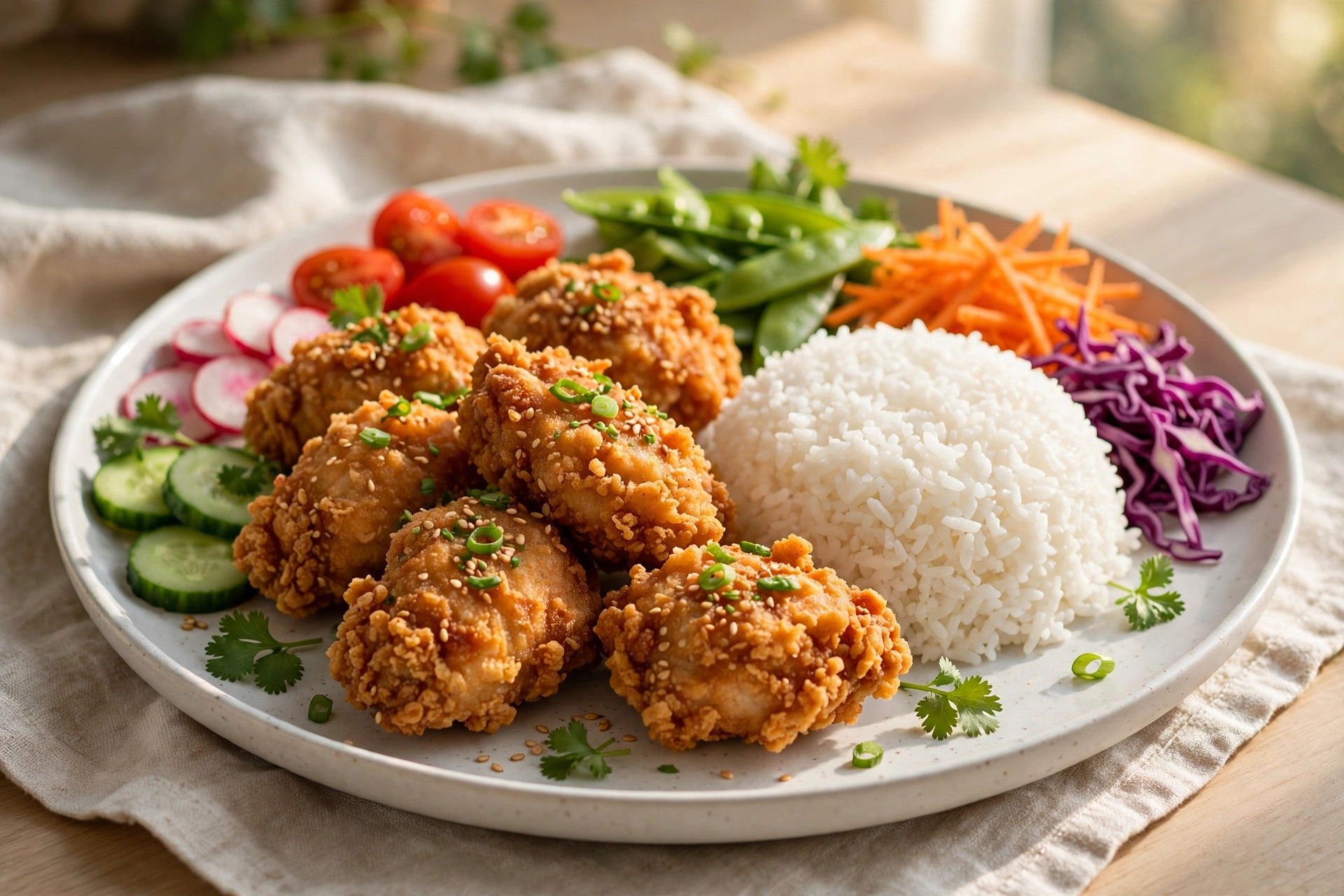
What “halal” means for fried chicken
For chicken to be halal, two things generally need to be true:
- The chicken itself must be halal-slaughtered (zabihah) — slaughtered according to Islamic guidelines. This is about the supply chain, not the restaurant’s cooking.
- Preparation must avoid cross-contamination with non-halal items (pork, alcohol) — this is about the kitchen.
Both matter. Halal chicken cooked in a fryer shared with pork items, or glazed with a sauce containing alcohol, wouldn’t meet most people’s halal standards even if the bird was slaughtered correctly.
Bonchon’s chicken sourcing: why it varies
Here’s the key structural fact: Bonchon US locations are predominantly franchised. That means individual owners choose suppliers within brand guidelines, and those choices differ by market. In areas with large Muslim populations — parts of New Jersey, Texas, Michigan, the DC metro — some Bonchon locations specifically source halal-certified chicken and will tell you so proudly. In other markets, the chicken comes from conventional suppliers.
Bonchon as a brand originated in South Korea and expanded globally; halal certification practices differ across its international markets (some countries’ Bonchon locations are certified halal, others aren’t). For the US specifically, there is no blanket brand-level halal certification I can point you to — which is exactly why the location-by-location check matters.
Bottom line: never assume. A Bonchon in one city can be halal while a Bonchon two towns over isn’t.
Which menu items need the closest scrutiny
Even at a location with halal chicken, the rest of the menu needs a careful eye:
The chicken itself: ask whether the chicken is halal-certified and, if possible, which certifier. “Our supplier is halal” is a good sign; “I think so” is not.
Pork items: Bonchon serves pork belly bao buns and pork potstickers. If you eat at a location that serves pork, ask about fryer separation and utensil practices. Some halal-observant diners are comfortable if the chicken is halal and fryers are separate; others prefer locations that don’t serve pork at all.
Sauces: the four core sauces (soy garlic, spicy, Korean BBQ, yangnyeom) are generally free of alcohol and pork, but recipes can include wine or mirin-style ingredients in some preparations. Ask to see ingredient lists — this is a reasonable request.
The takoyaki and katsu-style toppings: some Japanese-influenced sauces contain mirin (rice wine) or dashi with alcohol-derived ingredients. Worth asking about if you’re strict.
Desserts and drinks: Korean donuts are typically fine, but check limited-time items.
How to verify your local Bonchon: a step-by-step
This is the most useful part of this guide. Do this before you order:
- Call ahead, don’t just show up. Ask: “Is your chicken halal-certified?” If yes: “Which certifier?” Write down the answer.
- Ask about pork in the kitchen. “Do you serve pork items here, and are the fryers shared between chicken and pork?”
- Ask about the sauces. “Do any of your sauces contain alcohol, wine, or mirin?”
- Check for certification signage. Many halal-serving locations display their certificate in-store or on their website/social media.
- Check reviews. Search “[your city] Bonchon halal” — Muslim diners often leave reviews confirming halal status, and local halal food blogs or apps (like Zabihah.com) sometimes list specific locations.
If the staff can’t answer these questions confidently, treat that as a “not verified” — not a “no,” but not a yes either.
What different levels of observance might decide
People draw the line in different places, and that’s normal:
- Strictest standard: only eat at locations with displayed halal certification from a recognized body, verified fryer separation, and no pork on the premises.
- Common middle ground: halal-certified chicken confirmed by staff, comfortable with shared kitchens as long as no pork is fried in the same oil.
- Ingredient-focused: mainly concerned with the meat being halal and no alcohol/pork ingredients in what they eat.
None of these is “wrong” — know your own standard and verify against it.
Halal alternatives if your Bonchon isn’t halal
If your local Bonchon can’t confirm halal chicken, you still have options:
- Check other nearby locations. In metro areas with multiple Bonchons, halal status often differs by store.
- Other Korean fried chicken chains: some locations of competing chains (like certain bb.q Chicken stores) advertise halal chicken — same verification process applies.
- Halal fried chicken spots: many cities have halal-certified fried chicken restaurants (often Middle Eastern or South Asian style) that scratch a similar itch, if not the exact Korean double-fried texture.
- Make it at home: Korean fried chicken is very achievable in a home kitchen — double-fry, toss in a soy-garlic glaze, and you control the entire supply chain.
Reading a halal certificate: what to look for
If a location says it’s halal, ask to see the certificate — legitimate halal-serving restaurants usually display one. Here’s what to check:
- The certifying body’s name. Recognized US certifiers include IFANCA, HMC USA, and various regional bodies. A certificate should name the organization, not just say “halal.”
- What exactly is certified. Some certificates cover only the chicken supply; others cover the full operation. “Halal chicken supplier” and “halal-certified kitchen” are different claims.
- The date. Certificates expire. A 2022 certificate on the wall in 2026 deserves a follow-up question.
None of this is about being difficult — staff at genuinely halal locations are used to these questions and usually happy to show documentation.
Halal considerations beyond the chicken
A few preparation details that matter once the chicken itself checks out:
- Frying oil: the oil itself is plant-based and fine, but shared fryers are the issue (see pork section). Some diners also ask whether the oil is filtered/changed on a schedule that avoids cross-contact — a fair question at high-volume stores.
- Batter and breading: standard batters are typically halal-suitable, but ask about any wine-derived or animal-derived ingredients if you’re strict.
- The “hand-slaughtered vs. machine” question: standards differ among scholars and individuals. If this distinction matters to you, ask the supplier/certifier specifically — restaurant counter staff often won’t know, so get the certifier’s name and check their standards yourself.
Dining out with a mixed group
If you’re the halal-observant diner in a group of friends heading to Bonchon, a few practical tips:
- Call ahead for the group. One five-minute call saves an awkward moment at the counter.
- Suggest the location if you know which nearby Bonchon is halal-verified — most friends won’t care which store you pick.
- Bao and tacos can be your friend. If the chicken situation is uncertain but you still want to join, ask about the non-chicken items’ preparation — though honestly, at that point you may prefer suggesting a different restaurant.
Sample halal-friendly orders (once verified)
Once you’ve confirmed your location’s halal status, here are orders that work well within halal guidelines:
- The classic: 10-piece wings in soy garlic + steamed rice + kimchi. Simple, satisfying, and easy to verify.
- The group order: half-and-half wings (soy garlic + spicy) + bibimbap + edamame to share.
- The cautious order: if you’ve confirmed halal chicken but are unsure about sauces, ask for the chicken lightly sauced or with sauce on the side, and stick to rice and vegetable sides.
Avoid the pork bao, pork potstickers, and takoyaki (octopus + toppings need verification) unless you’ve specifically cleared them.
Why this question matters more than people think
“Is Bonchon halal?” gets asked so often because Bonchon sits at an interesting intersection: it’s a global chain with Korean roots, franchised stores, and a menu built for sharing — exactly the kind of place Muslim families and friend groups want to enjoy together. The lack of a simple yes/no answer is frustrating, but it’s also the honest reality of franchised restaurants.
Halal status can change — re-verify periodically
One last thing people forget: a location that was halal last year might not be today. Franchise owners change suppliers, management turns over, and certifications lapse. If it’s been a while since you verified, a quick call before your next order is worth it — especially if you noticed menu or ownership changes. Think of halal verification like checking a price: a habit, not a one-time event.
Bonchon halal FAQ
Is Bonchon halal in the USA?
There’s no brand-wide US halal certification. Some individual franchised locations source halal-certified chicken — especially in areas with large Muslim populations — while others don’t. You must verify with your specific location.
Is Bonchon chicken halal?
The chicken can be halal at locations whose owners source from halal-certified suppliers. Ask your local store directly which supplier and certifier they use.
Does Bonchon serve pork?
Yes, at most locations — pork belly bao buns and pork potstickers are regular menu items. If this matters to you, ask about fryer separation and cross-contact practices.
Are Bonchon’s sauces halal?
The four core sauces are generally free of pork and alcohol, but formulations can include wine-derived or mirin-style ingredients in some preparations. Ask to see ingredient information at your location.
How can I find a halal Bonchon near me?
Call your nearest locations and ask directly, search “[your city] Bonchon halal” for diner reviews, and check halal restaurant directories like Zabihah.com. Locations that are halal usually say so proudly.
Is Bonchon halal in other countries?
It varies by market — some international Bonchon locations are certified halal, others aren’t. This guide covers the US; if you’re traveling, verify locally.
Last updated: October 2026. Halal certification is location-dependent and can change. This is an independent guide — always verify directly with your local Bonchon restaurant before ordering.