
Bonchon Calories & Nutrition 2026: Full Guide
If you’ve searched “bonchon calories” lately, you’ve probably noticed something frustrating: plenty of pages with “nutrition” in the title, almost none with actual numbers. This guide fixes that — with the real thing. Every figure below comes from Bonchon’s official nutrition PDF (July 2026), not estimates or guesses: wings, drumsticks, strips, boneless, starters, mains, sides, and more, plus how to order lighter without giving up the crunch.
About the numbers: Chicken values below are the official Spicy–Soy Garlic range — the two most-ordered flavors. (Bonchon’s PDF also lists Korean BBQ, Yangnyeom, and Classic Crunch, which run a little higher on calories for wings; the PDF’s sauce-free rows mean standalone sauce nutrition stays estimated.) Official servings can be generous (the PDF’s buldak serving, for example, is 46 oz), so where the official serving differs from a typical single order, I say so. Figures can still vary slightly by location since Bonchon restaurants are franchised. See Bonchon’s official nutrition PDF (July 2026).
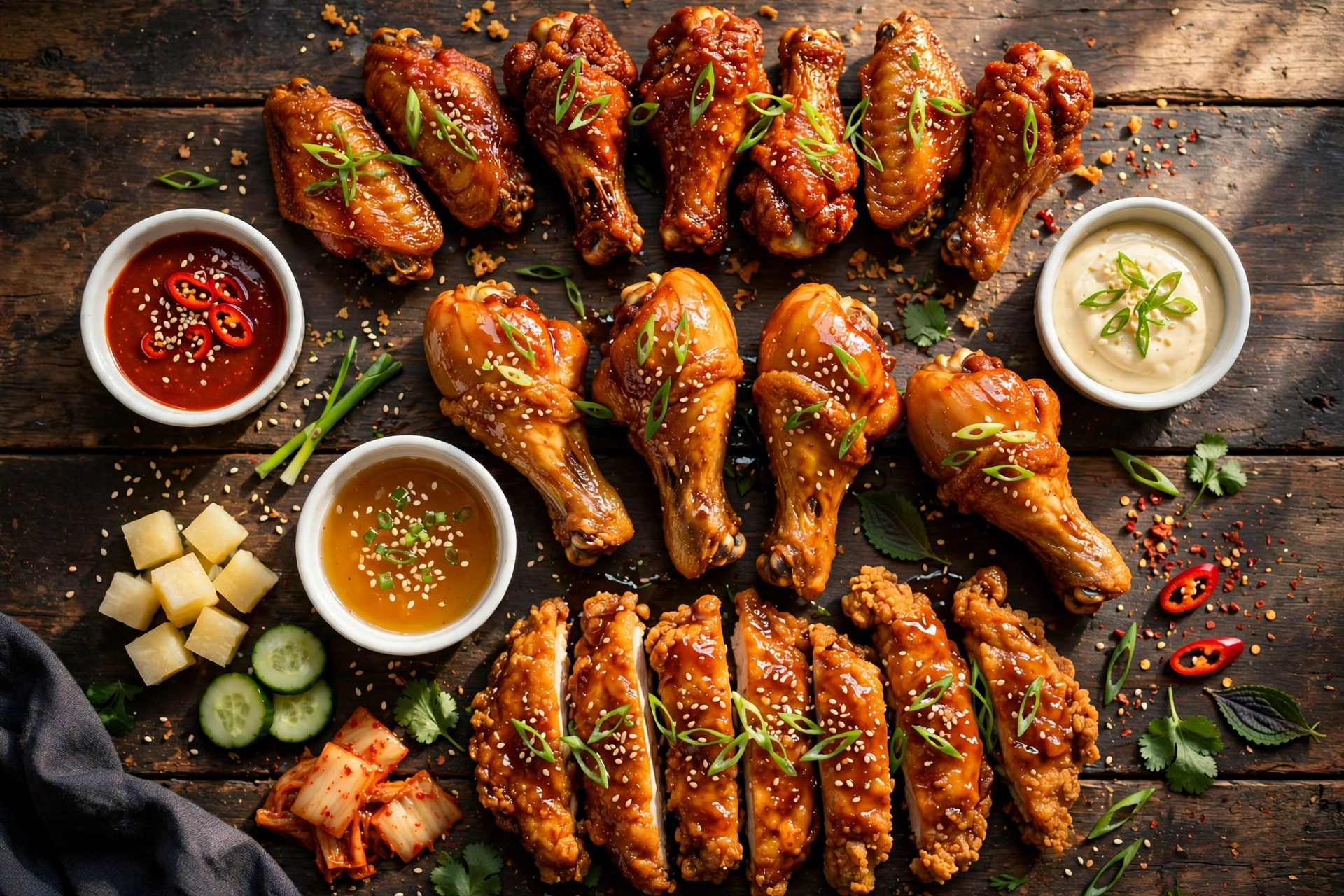
Bonchon calories at a glance
| Item | Serving | Calories (official) | Protein (official) |
|---|---|---|---|
| Wings | 10 pc (small) | 800–850 | 56 g |
| Wings | 20 pc (medium) | 1,600–1,700 | 112 g |
| Wings | 30 pc (large) | 2,400–2,550 | 168 g |
| Drumsticks | 5 pc (small) | 957–1,007 | 70 g |
| Drumsticks | 10 pc (medium) | 1,914–2,014 | 140 g |
| Drumsticks | 15 pc (large) | 2,871–3,021 | 210 g |
| Strips | 10 pc (small) | 1,156–1,179 | 91 g |
| Strips | 20 pc (medium) | 2,312–2,358 | 182 g |
| Strips | 30 pc (large) | 3,468–3,537 | 273 g |
| Boneless | 12 pc (small) | 1,768–1,776 | 204 g |
| Boneless | 24 pc (medium) | 3,537–3,552 | 409 g |
| Boneless | 36 pc (large) | 5,305–5,328 | 613 g |
| Bulgogi Fries | 1 order | 1,003 | 43 g |
| Potstickers | 1 order (~8 pc) | 725–744 | 17 g |
| Bao Buns | 1 order (3 pc) | 790 | 12 g |
| Bibimbap (chicken) | 1 bowl | 919–970 | 26–27 g |
| Japchae | 1 order | 887 | 22 g |
| Tteokbokki | 1 order | 980 | 32 g |
| Korean Donuts | 2 pc | 379 | 6 g |
| Steamed Rice | 1 side | 398 | 8 g |
| Kimchi | 1 side | 67 | 4 g |
Ranges cover Bonchon’s Spicy and Soy Garlic flavors. Official PDF serving sizes: steamed rice 8 oz, kimchi 8 oz. Source: Bonchon official nutrition PDF (July 2026).
How to read these numbers (per-piece math)
Tables are useful, but the real power move is knowing the per-piece math so you can estimate any order on the fly. These are the official per-piece figures:
- Wings: 80–85 calories each. A wing is mostly skin and bone, which means a higher share of its calories come from the crispy fried skin and the glaze clinging to it.
- Drumsticks: 191–201 calories each. They’re the meatiest cut, so more of the calories are protein rather than skin and coating — about 14 g of protein per drumstick.
- Strips: 116–118 calories each. Boneless, uniform, and easy to eat — no bones, no mess, perfect for dipping.
- Boneless pieces: 147–148 calories each, with about 17 g of protein per piece. Chunkier than strips with a bit more coating per bite — the protein powerhouse of the menu.
These are official figures for sauced chicken (Spicy/Soy Garlic). Add steamed rice (+398 for the official 8 oz serving), fries, or a soda and the meal climbs fast. The per-piece math is also why sharing changes everything: a 30-piece wings order is 2,400+ calories solo but about 800 per person split three ways — a completely normal dinner.
Wings: the classic order, decoded
Wings are what Bonchon is famous for, and the official numbers confirm the reputation: a 10-piece small runs 800–850 calories (Spicy–Soy Garlic), or about 80–85 per wing. A 20-piece order is 1,600–1,700 and a 30-piece 2,400–2,550. The skin-to-meat ratio is high, so a disproportionate share of the calories live in that shattering double-fried skin and the hand-brushed glaze.
What the official data also shows: wings are the cut where sauce choice matters most for calories, because the high skin surface area grabs more glaze. Against Spicy as the baseline, Soy Garlic adds about 50 calories per 10-piece order, Korean BBQ about 100, and Yangnyeom about 140. If you love wings but want to trim the damage, drumsticks give you more protein per calorie — about 14 g per piece versus 5–6 g for a wing.
The 10/20/30-piece sizes are designed for 1, 2, and 3–4 people respectively — a 20-piece solo is a 1,600+ calorie commitment before sides.
Drumsticks: the protein pick
Five drumsticks deliver about 70 g of protein for 957–1,007 calories. That’s a genuinely strong protein-to-calorie ratio for fried chicken: roughly 14 g of protein per drumstick at around 191–201 calories each.
The drumstick’s thickness means sauce sits more on the surface than soaking in, so the glaze adds slightly less per piece than on wings.
Strips: the efficiency pick
Strips don’t get enough respect. Ten pieces at 1,156–1,179 calories with 91 g of protein makes them one of the most protein-efficient fried options per bite — and they’re the easiest to eat: no bones, no mess, perfect for dipping. The uniform shape means the coating is consistent, which makes them predictable.
A 10-strip order with kimchi is roughly 1,225 calories with 95 g of protein — a legitimate high-protein meal. Kids demolish these, and honestly, so do I.
Boneless: the crowd-pleaser (and the calorie heavyweight)
Here’s the number that surprises everyone: 12 boneless pieces officially pack 1,768–1,776 calories and 204 g of protein. The chunky, nugget-style pieces carry about 147 calories and 17 g of protein each — more per piece than any other cut. The format is unbeatable for groups (easy to grab, easy to share, no bones), but a 12-piece “small” is genuinely two meals’ worth of food.
Watch for sauce pooling: the craggy surface of boneless holds more glaze than a strip. For parties, split sauces — half the crowd wants soy garlic anyway — and plan on the small feeding two, not one.
Starters: where meals quietly double
Starters are the stealth calorie bomb at Bonchon, because they arrive when you’re hungriest and disappear fastest. Here’s the honest breakdown, all official figures:
Bulgogi fries (1,003 cal, 43 g protein): This is the big one. A full tray of fries loaded with marinated beef, mozzarella, and spicy mayo is essentially a second meal disguised as an appetizer. It’s delicious — the beef is tender, the cheese pull is real — but ordering it alongside a 20-piece chicken order means you’ve committed to nearly 2,700 calories before you blink. My rule: bulgogi fries or a big chicken order, never both, unless you’re feeding four people.
Potstickers (725–744 cal per order, 17 g protein): Pan-fried pork or vegetable dumplings with your choice of sauce brushed on. Reasonable protein, and an order split between two people is a ~365-calorie opener.
Bao buns (790 cal, 12 g protein for 3 pc): Soft, fluffy, and deceptively filling — nearly 800 calories for three buns. The pork belly version runs highest; fried chicken and bulgogi fillings are a touch lighter. Three buns is genuinely a meal for one person.
The lighter end of the starter menu: takoyaki (342 cal), shrimp shumai (470 cal steamed), sotteok sotteok skewers (219 cal), and the mopo corn dog (290 cal). Popcorn shrimp is heavier than it looks at 890 calories for the official 12 oz serving — pick cucumber wasabi over spicy mayo. Korean tacos run 950–960 calories. Edamame is 270 calories for the official 4 oz serving with a hefty 27 g of protein.
Main dishes: the full-meal breakdown
Bonchon’s Korean dishes are where the menu gets genuinely interesting nutritionally, because rice and noodle bowls behave very differently from fried chicken platters. Note the official servings here are generous — these are full-meal numbers:
Bibimbap (919–970 cal with chicken, 26–27 g protein): The most balanced full meal on the menu. Rice, vegetables, egg, and your choice of protein — it’s the one dish where you get fiber, micronutrients, and protein in a single bowl. The soy garlic chicken version (919 cal) edges out spicy (970 cal). Tofu drops it to around 800 calories. If someone asked me for one “healthy” Bonchon order, this is it, no contest.
Japchae (887 cal, 22 g protein): Sweet potato glass noodles with vegetables and sesame — heartier than its light reputation suggests, but satisfying. Pair it with a few strips if you want to round out the macros. The noodles are naturally gluten-free, though cross-contact in the kitchen is likely.
Bulgogi (1,940 cal, 79 g protein): Heads-up: the official 32.2 oz serving is enormous — this is a shareable platter, not a solo bowl. The beef itself is lean and protein-rich; the calories come from the sweet marinade and the sheer volume. Split it.
Chicken katsu (1,319 cal, 65 g protein) has the thickest breading on the menu — closest to American-style fried chicken and the highest-calorie chicken dish outside the big shareable orders. Tteokbokki (980 cal, 32 g protein) is moderate but carb-heavy, so it won’t hold you long alone. Buldak (2,610 cal, 99 g protein) is a 46 oz mountain — intense heat plus cheese, built for two or three. Udon noodle soup (480 cal, 24 g protein) is one of the lighter full meals thanks to broth volume (still a salty broth, though). House fried rice (1,168 cal plain, 1,321 with chicken) is calorie-dense by nature — treat the portion as the meal, not a side. Newer additions: the chicken sandwich (964–1,044 cal by flavor, 51–53 g protein) and Korean street corn (345 cal).
Sides, desserts & drinks: the small stuff that adds up
Steamed rice (398 cal for the official 8 oz serving): The baseline side — heartier than most people assume. Plain, filling, and the best vehicle for soaking up bulgogi juices.
Kimchi (67 cal) and pickled radish (15 cal): The two lowest-calorie items on the entire menu at official serving sizes. Fermented, flavorful, and genuinely good for you. I add one of these to nearly every order — they cut richness and add crunch for almost zero caloric cost.
Creamy coleslaw (120 cal) is lighter than its reputation. French fries run 360 cal, seasoned fries 430, onion rings 680. Korean donuts (379 cal for two) are worth it occasionally — just don’t pretend it’s a light finish. And a bottled soda adds 150+ calories and ~40 g of sugar; water or unsweetened tea keeps the meal’s total honest.
Protein: the full leaderboard
If protein is your priority, Bonchon is quietly one of the better fast-casual options. Here’s how the menu stacks up by official protein per standard serving:
| Item | Protein (official) | Calories (official) | Protein per 100 cal |
|---|---|---|---|
| Boneless (12 pc) | 204 g | 1,768–1,776 | 11.5 g |
| Drumsticks (5 pc) | 70 g | 957–1,007 | 7.1 g |
| Strips (10 pc) | 91 g | 1,156–1,179 | 7.8 g |
| Wings (10 pc) | 56 g | 800–850 | 6.8 g |
| Bibimbap (chicken) | 26–27 g | 919–970 | 2.8 g |
| Edamame | 27 g | 270 | 10.0 g |
| Bulgogi fries | 43 g | 1,003 | 4.3 g |
| Bao buns (3 pc) | 12 g | 790 | 1.5 g |
| Potstickers (1 order) | 17 g | 725–744 | 2.3 g |
Boneless wins on sheer protein — 204 g in a 12-piece order — while edamame is the efficiency dark horse at 10 g of protein per 100 calories. The chicken itself does the heavy lifting; the sides are just along for the ride.
Sodium: the number to actually watch
Calories get the attention, but sodium is the sleeper issue at Bonchon — and the official numbers confirm it. A 10-piece wings order carries 1,028–1,045 mg of sodium (Spicy–Soy Garlic); five drumsticks run about 957 mg. Between the seasoned fry, the soy-based sauces, and salty sides, a full chicken order with sides can land anywhere from 2,000 to well over 4,000 mg of sodium — at or above the full day’s recommended limit of 2,300 mg in a single meal.
Where the sodium hides:
- The sauces. Soy garlic and Korean BBQ are the saltiest glazes; they’re soy-based, so this shouldn’t surprise anyone, but the amounts add up across 20 pieces.
- The seasoned fry. The chicken is seasoned before frying, so even “plain” Bonchon chicken carries meaningful sodium.
- The sides. Kimchi, pickled radish, and seasoned fries are all salt-forward. Ordering kimchi and pickled radish and soy garlic wings is a sodium triple-stack.
- The mains. Bibimbap with chicken can carry 2,700+ mg; fried rice with kimchi bacon tops 3,300 mg.
If sodium matters to you, choose spicy over soy garlic, balance with plain steamed rice instead of a second salty side, and drink water with the meal.
How each sauce changes the numbers
Bonchon’s official PDF doesn’t publish standalone sauce nutrition, so the per-sauce add-ons below are estimates — but the differences between flavors are official, measured from the 10-piece wings rows. For the full flavor breakdown, see every Bonchon sauce ranked:
- Soy Garlic: the classic — savory, sweet, garlicky. About 50 calories more than Spicy per 10-piece order. Mid-range sodium.
- Spicy: slow-building heat and the lightest of the core flavors. The heat comes from chili rather than sugar.
- Korean BBQ: thicker, tangier glaze. About 100 calories more than Spicy per 10-piece order; among the saltiest.
- Yangnyeom: sweet-spicy traditional glaze. About 140 calories more than Spicy; highest sugar of the four.
- Honey Citrus (where available): not in the official PDF — estimated as the lightest option, a thinner, brighter finish.
- Half-and-half: splitting two flavors doesn’t change the total much, but it’s the smartest way to taste without committing a whole order to the sweetest glaze.
10 lighter ways to order at Bonchon
- Respect the boneless count — 12 pieces is 1,770+ calories. Split it or box half immediately.
- Go half-and-half with one lighter sauce — try spicy + honey citrus instead of double yangnyeom.
- Skip the fries-based starters — bulgogi fries alone are 1,003 calories; potstickers or edamame are lighter openers.
- Add kimchi or pickled radish as your side: big flavor for under 70 calories.
- Choose udon soup or bibimbap when you want a full meal under 1,000 calories — 480 and ~920 respectively.
- Share the large — a 30-piece wings order split three ways is an ~800-calorie dinner each, not a 2,400-calorie solo mission.
- Drink water, not soda — an easy 150+ calories saved per meal.
- Start with edamame — 270 calories and 27 g of protein that takes the edge off hunger before the chicken arrives.
- Box half before you start. Ask for a to-go box with your order, pack half immediately, and enjoy tomorrow’s lunch as much as tonight’s dinner.
- Try a Bonchon lunch special — smaller portions built for one person, so the meal’s total stays reasonable by design.
Allergen and dietary notes
Bonchon’s kitchen handles soy, wheat, sesame, egg, fish, and shellfish, so cross-contact is likely. The sauces and batters contain soy and wheat almost across the board, which rules out most of the fried chicken menu for gluten-free diners. Sesame appears in bibimbap, japchae, and several sauces. For the full item-by-item breakdown, see our Bonchon allergen guide — and when in doubt, ask the specific location, since recipes can vary.
Bonchon nutrition FAQ
How many calories are in 10 Bonchon wings?
800–850 calories for a 10-piece order (Spicy–Soy Garlic, official figures), or about 80–85 calories per wing. A 20-piece order is 1,600–1,700 and a 30-piece 2,400–2,550.
Which Bonchon sauce has the least calories?
Spicy is the lightest of the core flavors in Bonchon’s official data. Soy garlic adds about 50 calories per 10-piece order versus spicy; Korean BBQ about 100 more; yangnyeom about 140 more. Honey citrus (where available) isn’t in the official PDF but is estimated as the lightest.
Is Bonchon healthy?
It’s indulgent food — double-fried chicken with sweet glazes is high in calories and sodium, and the official numbers are higher than most estimates you’ll find online. But you can build a reasonable meal: udon noodle soup (480 cal), a chicken bibimbap bowl (919 cal), or strips with kimchi. Read our full is Bonchon healthy breakdown for the dietitian-style verdict.
How much protein is in Bonchon chicken?
Official figures: 56 g per 10 wings, 70 g per 5 drumsticks, 91 g per 10 strips, and 204 g per 12 boneless pieces. It’s a genuinely high-protein menu if you skip the sugariest sauces.
Does Bonchon publish official nutrition information?
Yes — Bonchon publishes an official nutrition PDF (updated July 2026), and every figure on this page comes from it. Read Bonchon’s official nutrition PDF. Note the PDF doesn’t list standalone values for the five signature sauces, and two rows appear to contain print errors (a transposed 4pc/5pc soy garlic drumstick pair and an implausible protein figure on one strips row) — both are corrected or flagged above.
What’s the lowest-calorie thing on the Bonchon menu?
Among real menu items: pickled radish (15 cal), kimchi (67 cal), and sotteok sotteok skewers (219 cal). For a full meal, udon noodle soup at 480 calories is the lightest complete order.
Last updated: October 2026. Figures from Bonchon’s official nutrition PDF (July 2026); menu items and prices vary by location.