
Bonchon Allergen Guide 2026: What’s Safe to Order
I’ll be honest with you: Bonchon is one of the harder restaurant menus to navigate with a food allergy. That famous shattering crunch comes from a wheat-based batter, the sauces are built on soy, and sesame shows up in places you’d never expect.
One important note before we start: Bonchon locations are largely franchised, and recipes, suppliers, and preparation methods can vary by store. Treat everything below as a well-informed starting map, not a medical document. For the final word, check Bonchon’s official allergen documentation and talk to the staff at your specific location — especially if your allergy is severe.

Why Bonchon is tricky for allergies
Three things about how Bonchon cooks create most of the risk:
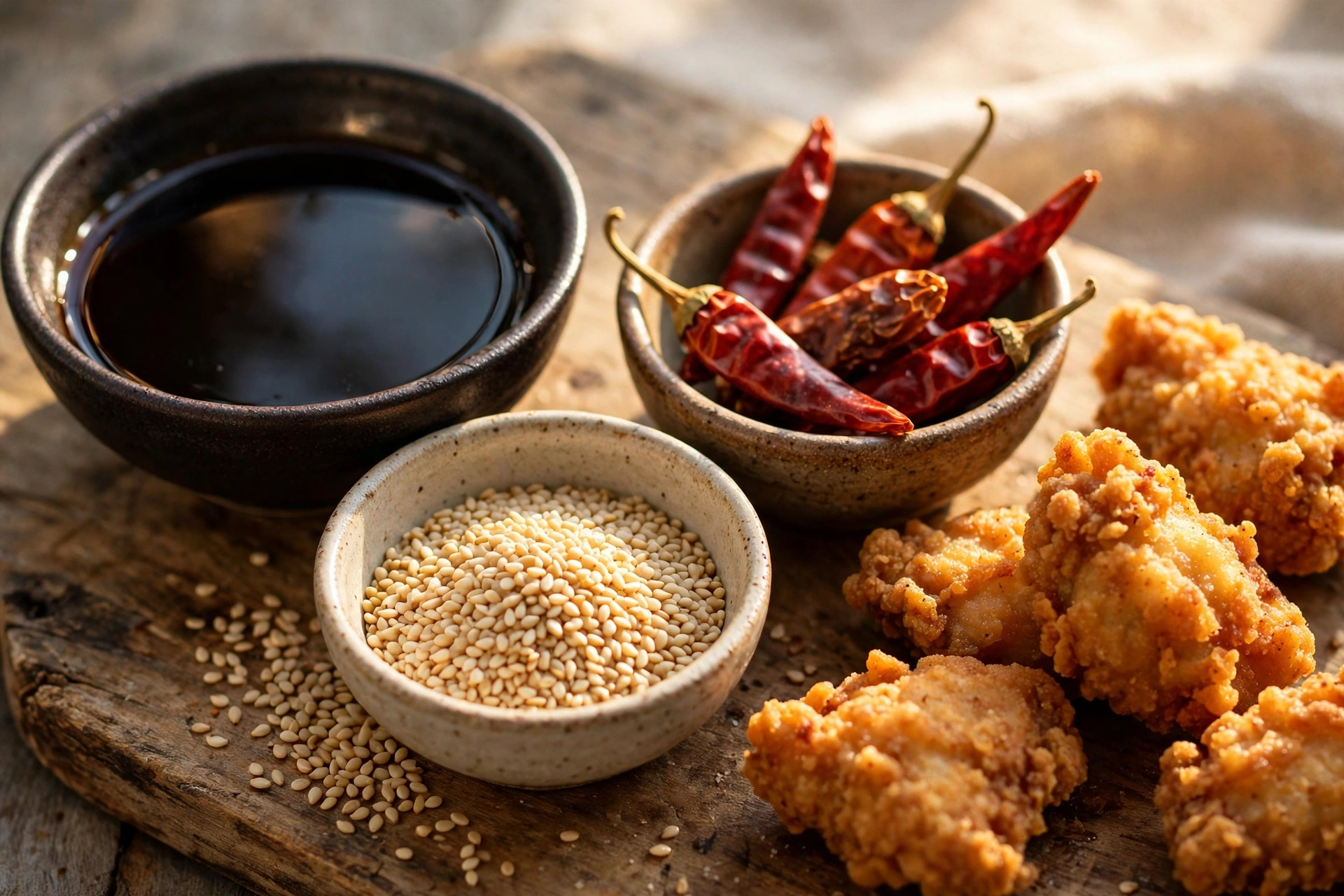
The batter. That glass-like crust on the chicken is a wheat-flour-based coating. It’s the whole point of the restaurant, which means virtually every fried item on the menu contains gluten. There’s no grilled-chicken workaround on the core menu.
The sauces. All four core sauces — soy garlic, spicy, Korean BBQ, yangnyeom — are soy-sauce-based. Soy garlic obviously leads with it, but the others use soy as a backbone too. If you have a soy allergy, the sauce lineup is essentially off the table.
The shared kitchen. Bonchon kitchens fry different items in shared fryers and prep on shared surfaces. Even an item whose ingredients look safe can pick up cross-contact. This matters most for wheat, shellfish (from the shrimp items), and sesame.
Wheat and gluten: the biggest limitation
Let’s not sugarcoat this: if you have celiac disease or a serious wheat allergy, Bonchon’s fried chicken menu is not for you. The batter contains wheat, the fryers are shared, and cross-contact is essentially guaranteed.
Here’s how wheat shows up across the menu:
- All fried chicken (wings, drumsticks, strips, boneless): contains wheat in the batter. No exceptions.
- Potstickers: wheat wrappers, whether steamed or fried.
- Bao buns: wheat-based steamed buns.
- Korean tacos: flour tortillas.
- Takoyaki: wheat-flour batter.
- Bulgogi fries: the fries themselves may be fine, but they’re topped in a shared kitchen and the dish includes wheat-containing sauces.
- Japchae: the glass noodles are typically sweet-potato starch (naturally gluten-free), BUT the dish is seasoned with soy sauce, which traditionally contains wheat. Ask about tamari or gluten-free soy sauce — most locations won’t have it, but it never hurts to ask.
- Sauces: soy-based sauces contain wheat (traditional soy sauce is brewed with wheat).
What might actually work for a gluten-sensitive diner: steamed white rice, kimchi, pickled radish, edamame, and coleslaw are the safest bets — but ask about cross-contact and dressings, since coleslaw dressing and kimchi seasoning vary. Be upfront with staff: “I have a wheat allergy — are these prepared away from the fryers?”
Soy: in almost every sauce
Soy is the backbone of Bonchon’s flavor system. It appears as soy sauce in all four core glazes, in marinades, and in several Korean dishes.
- All four core chicken sauces (soy garlic, spicy, Korean BBQ, yangnyeom): contain soy. This is non-negotiable — the chicken’s flavor comes from these.
- Bulgogi: marinated in a soy-based marinade.
- Japchae, bibimbap, tteokbokki: soy sauce in the seasoning.
- Potstickers and bao: soy in dipping sauces and fillings.
- Udon noodle soup: soy-based broth.
If you have a soy allergy, your realistic options narrow to plain items: steamed rice, edamame (confirm no soy-based seasoning — some locations toss it), kimchi, and pickled radish. Always confirm, because even “plain” sides can be seasoned.
Sesame: the sneaky one
Sesame hides in Korean cooking. At Bonchon, watch for:
- Sesame oil and sesame seeds as finishing touches on bibimbap, japchae, bulgogi, and fried rice.
- Sauce garnishes: some locations finish glazed chicken with sesame seeds.
- Tahini-style or sesame dressings on salads or slaw, where offered.
Sesame is now recognized as a major allergen in the US, and labeling has improved — but restaurant garnishes are applied by hand, so “I see sesame seeds on it” is your most reliable detector. If you’re sesame-allergic, ask for your chicken without garnish and confirm the oil used for finishing.
Egg: batter, mayo, and coatings
Egg shows up in a few places:
- Batter and breading: the fried chicken coating may contain egg as a binder (recipes vary by supplier — ask).
- Spicy mayo, Kewpie mayo: used on takoyaki, bao buns, bulgogi fries, and as dipping sauces. Contains egg.
- Fried egg toppings: udon noodle soup and some rice dishes offer a fried egg add-on.
- Korean donuts: the dough typically contains egg.
If your egg allergy is mild, the plain fried chicken might be fine — but “might” isn’t good enough for allergies. Ask specifically whether the batter contains egg at your location.
Milk and dairy
Bonchon is actually relatively dairy-light compared to American fried chicken chains (no buttermilk brine culture here), but dairy appears in:
- Mozzarella on bulgogi fries: the big one. That cheese pull is real dairy.
- Ranch dressing: served with tacos and as a dip — contains dairy.
- Korean donuts: may contain milk in the dough.
- Some mayo-based sauces: check labels.
The core fried chicken and the four main sauces are generally dairy-free, which makes Bonchon more dairy-friendly than most chicken chains — but verify, because recipes change.
Fish and shellfish
- Shrimp shumai and popcorn shrimp: obvious shellfish — avoid the fryer-shared items too if your allergy is severe.
- Takoyaki: contains octopus (mollusk) and is typically topped with katsu sauce and Kewpie mayo; some katsu-style sauces contain fish-derived ingredients.
- Katsu sauce and fish-derived seasonings: dashi or fish sauce can appear in Japanese-influenced items like takoyaki toppings and udon broth. Ask.
- Kimchi: traditional kimchi often contains fermented shrimp or fish sauce. If you have a shellfish or fish allergy, this “simple side” isn’t automatically safe.
Tree nuts and peanuts
Here’s some genuinely good news: Bonchon’s core menu is not nut-heavy. That said, dessert items and limited-time specials can introduce nuts without warning, and cross-contact in any shared kitchen is always possible. If you have a severe nut allergy, mention it when ordering so the staff takes extra care.
Cross-contact: the shared fryer problem
This deserves its own section because it’s the number-one reason “the ingredients look fine” still isn’t safe. At most Bonchon locations:
- Fryers are shared between chicken, shrimp items, and other fried foods. A shellfish-allergic diner reacting to shared oil is a real risk.
- Sauce brushes and utensils may be shared across flavors.
- Prep surfaces handle wheat-based items all day.
If your allergy is severe enough to carry an epinephrine auto-injector, be direct with the staff: “I have a severe [allergen] allergy — can you tell me about fryer sharing and cross-contact procedures at this location?” A good crew will give you a straight answer. If they seem unsure, that’s your answer too.
What to ask at the counter: a script
Allergy conversations go better when you’re specific. Here’s what I actually say:
- “I have a [wheat/soy/etc.] allergy. Which items on your menu contain it?”
- “Is your fryer oil shared between the chicken and the shrimp items?”
- “Does the batter contain egg or dairy at this location?”
- “Can I get the chicken without the sesame garnish?”
- “Do you have an allergen chart or ingredient binder I can look at?”
Most Bonchon locations can show you ingredient information if you ask — it just isn’t always displayed proactively.
Gluten-free at Bonchon: an honest assessment
Can you eat gluten-free at Bonchon? Barely, and only with caution. There is no gluten-free fried chicken, no GF batter option, and no dedicated GF fryer that I’m aware of at standard locations. Your realistic order is steamed rice + kimchi + edamame + pickled radish — a sad shadow of the menu, and even that requires a cross-contact conversation.
If you’re celiac, I’d be straight with you: Bonchon is a wheat restaurant the way a bakery is. The risk isn’t worth it. If you’re gluten-sensitive (not celiac) and comfortable with shared-kitchen risk, the rice-and-sides route is workable.
Ordering delivery with allergies
Delivery adds a layer of difficulty: you can’t have the counter conversation. My advice:
- Call the restaurant directly before placing a delivery-app order to discuss your allergy.
- Use the app’s instruction box for simple requests (“no sesame garnish, severe sesame allergy”), but don’t rely on it for complex ones.
- Pick up instead when the allergy is serious — the in-person conversation is worth the drive.
- Double-check the bag when it arrives. Mistakes happen more often on delivery orders.
For more on getting your food home in the best shape, see our Bonchon delivery and ordering guide.
Bonchon allergen FAQ
Does Bonchon have an allergen menu?
Bonchon provides allergen and nutrition documentation through its official channels. Ask your local restaurant for their current allergen chart — formulations can vary by location and over time, so the in-store document beats anything online.
Is Bonchon gluten free?
No. The fried chicken batter contains wheat, fryers are shared, and most sauces contain soy sauce (which contains wheat). There is no gluten-free fried chicken option at standard locations.
Does Bonchon use peanut oil?
Frying oil varies by location and supplier. Ask your specific restaurant what oil they fry in — this is one of the most location-dependent details on the menu.
Is Bonchon dairy free?
Mostly. The core fried chicken and four main sauces are generally dairy-free, but mozzarella (bulgogi fries), ranch dressing, and some desserts contain dairy. Always verify.
Does Bonchon have egg in the batter?
It can vary by supplier and location. The batter may contain egg as a binder. Ask directly at your store — this is a “don’t guess” item.
Is Bonchon’s kimchi vegetarian?
Traditional kimchi often contains fermented shrimp or fish sauce, so it isn’t reliably vegetarian or shellfish-free. Ask about the specific kimchi served at your location.
What should I do if I have a severe allergy?
Talk to the staff before ordering, ask about shared fryers and cross-contact, and request the location’s allergen documentation. If the crew can’t answer confidently, consider it a sign to eat elsewhere that day.
Last updated: October 2026. Allergen information varies by location and changes over time. This is an independent guide — always verify with Bonchon’s official documentation and your local restaurant staff before ordering, especially for severe allergies.